Design Process
Problem Solving - The true client problem for this project was that there was a need to raise awareness about the Center for Ecoliteracy and their causes. In order to achieve this goal six different advertisements were developed through effective copy writing, persona development, and clean composition techniques.
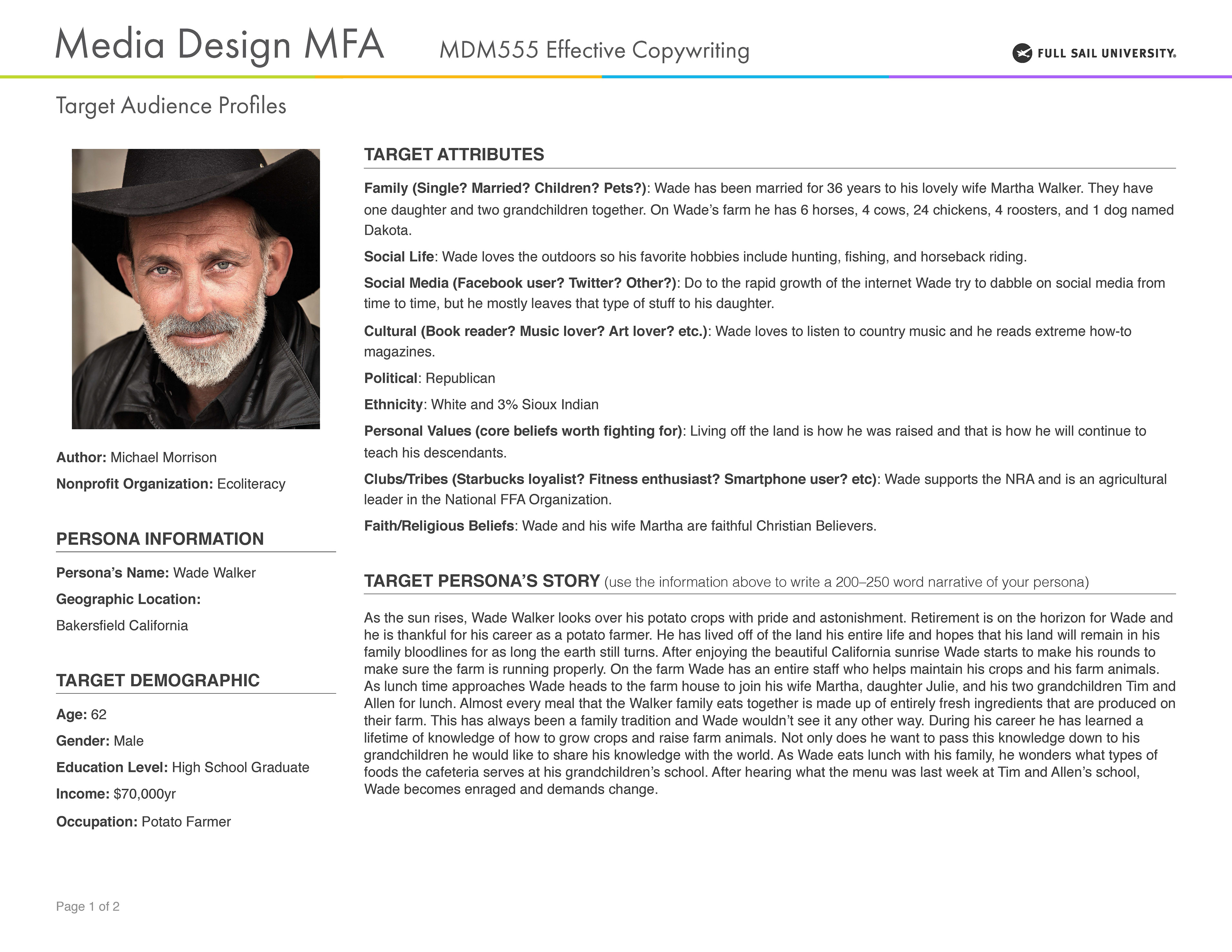
Research - Both qualitative and qualitative research was conducted on the Center for Ecoliteracy and their competitors. This research included topics such as who is the Center for Ecoliteracy, what do they do, who is their target audience, and who is their competition. Through this research it was determined that their were two strong character types that the advertisements could target. Two target audience profiles were created based on the found research and were used as the foundation for each advertisement composition.
Innovation - In order to achieve a certain level of innovation each advertisement was created specifically for the target audience profiles. The copy text, imagery, and page layout are all intended to evoke specific emotions within the target audience.
Target Audience Profiles
Within the target audience of the Center for Ecoliteracy there were multiple potential personas. Some of the personas included farmers, school representatives, and stay at home parents. Two specific target audience profiles were designed to help build a stronger connection with the target audience.
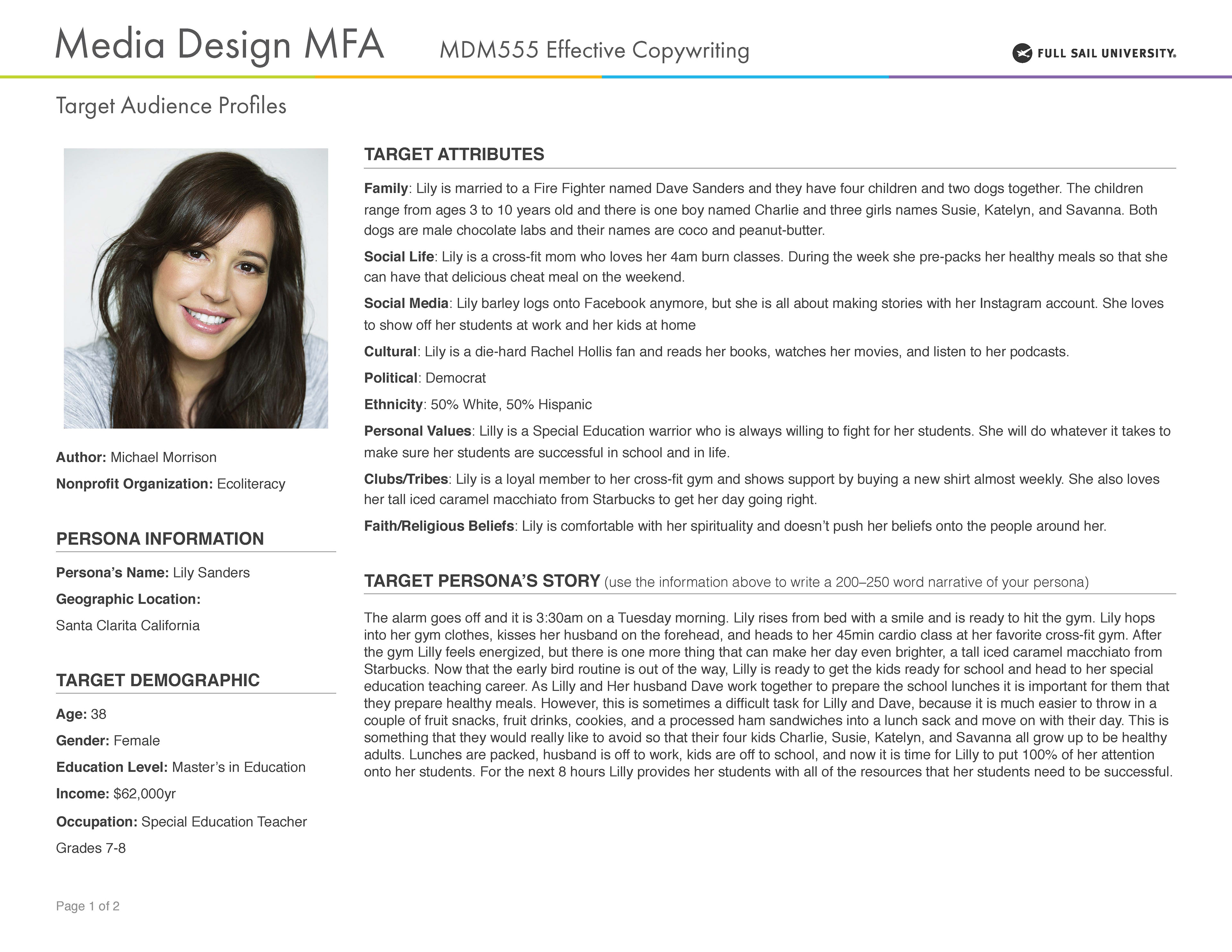
(Persona #1)
(Persona #2)
Composition Sketches
Each logo sketch contained sample copy text, basic page layout, and sample imagery. Each sketch was designed to speak directly to the target audience profiles.
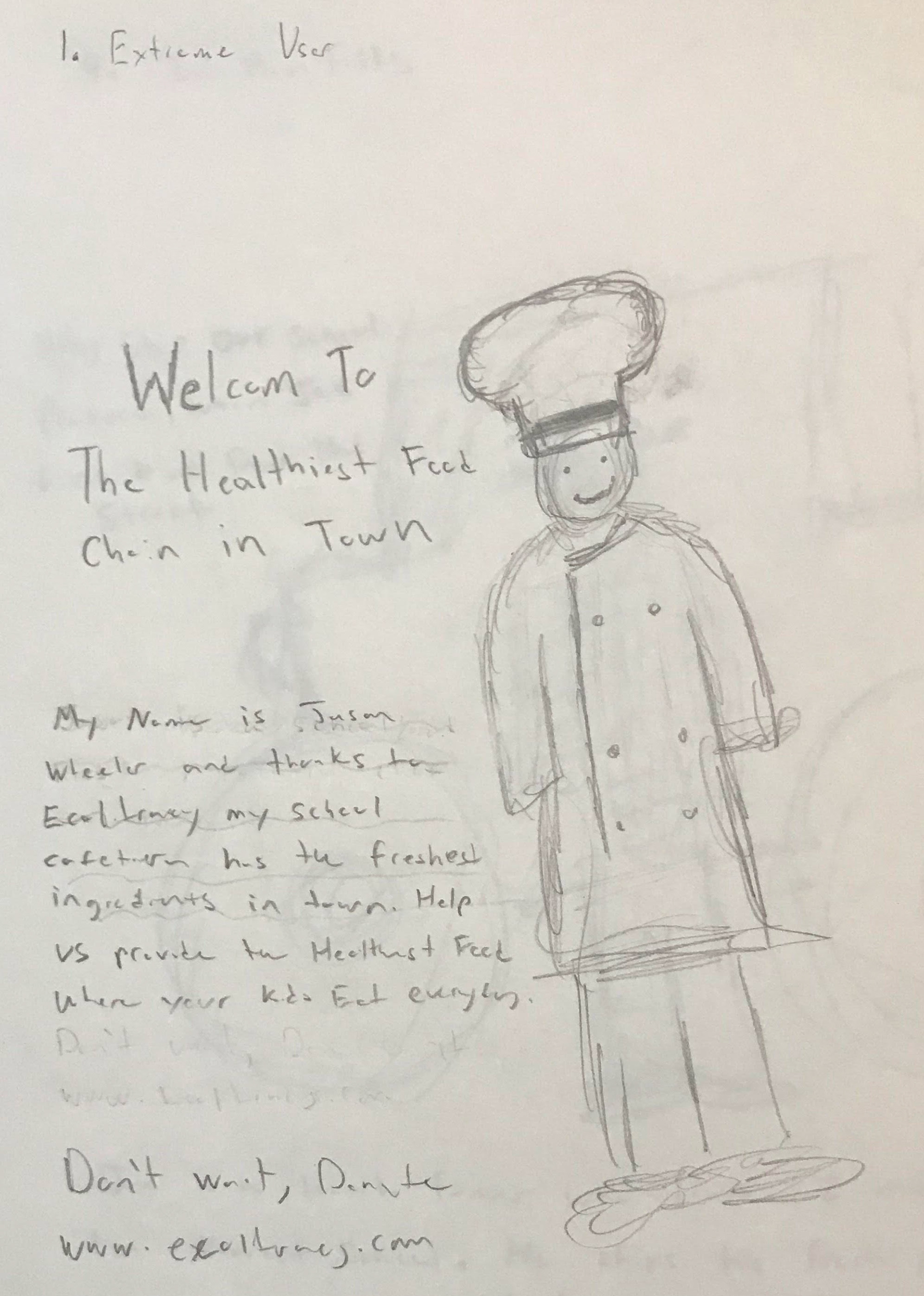
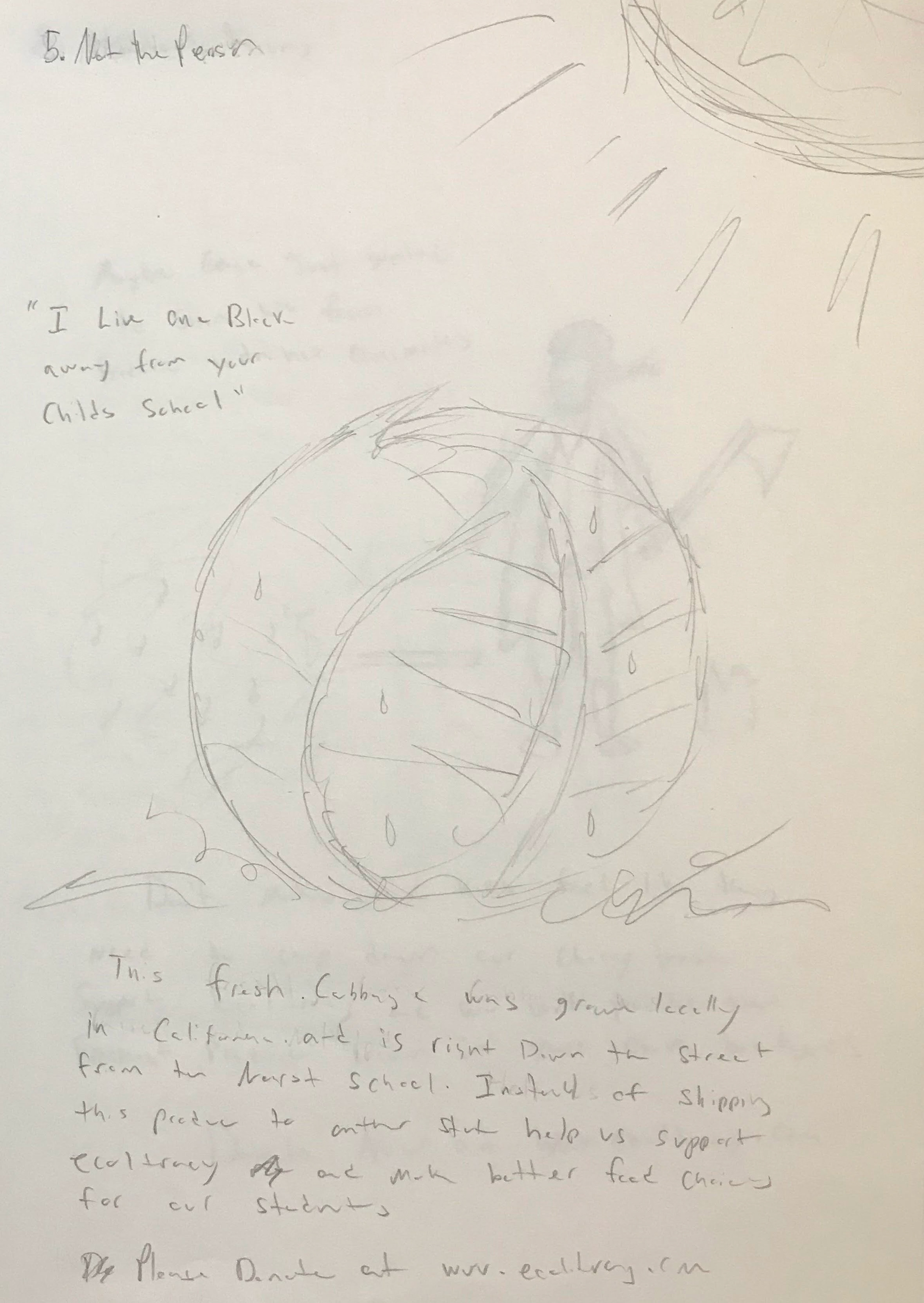
(Sample Sketch #1)
(Sample Sketch #2)
Final Composition Designs
Each final advertisement composition was designed to speak directly to the target audience profiles. These designs will help raise awareness about the Center for Ecoliteracy. They will also make a deeper connection with the target audience by evoking specific emotions within in them.

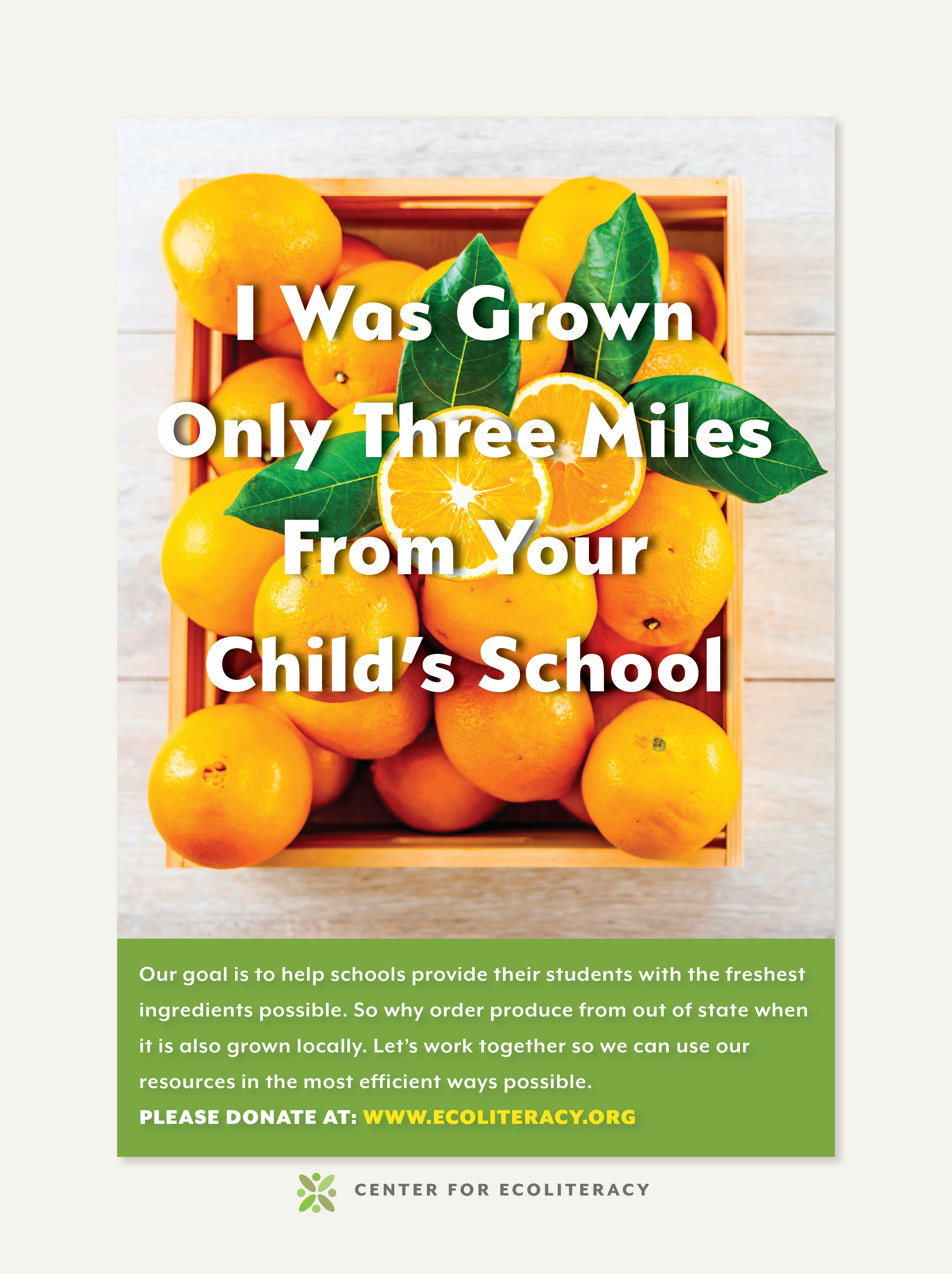
(Final Composition #1)
(Final Composition #2)


(Final Composition #3)
(Final Composition #4)

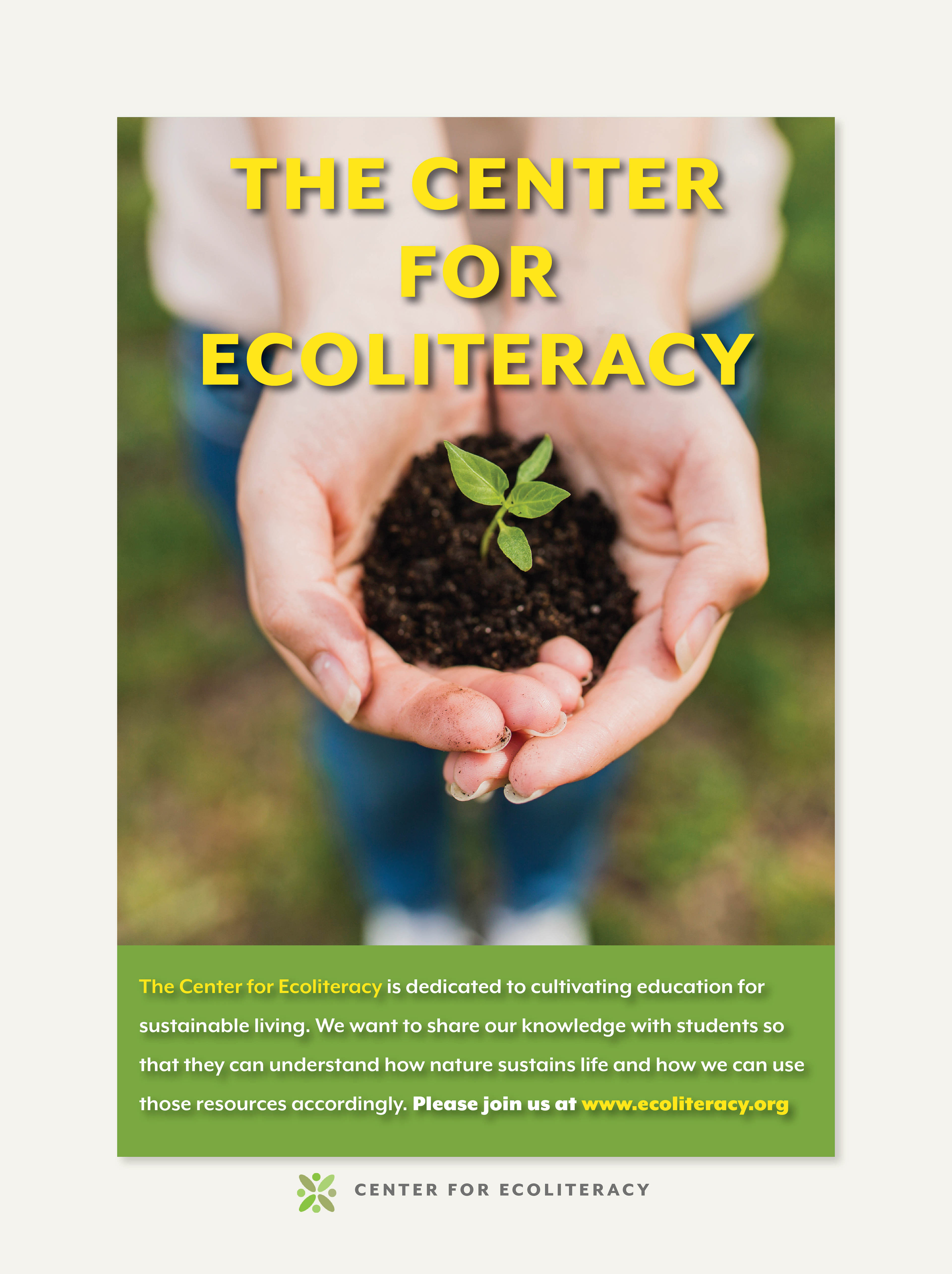
(Final Composition #5)
(Final Composition #6)